
Dash cams matter for every driver on the road today, but in a busy city like Sydney, they’ve gone from a nice extra to something close to essential. They record everything that happens in front of, and sometimes behind, your car. That footage helps with legal disputes, insurance claims, and the odd run-in with an aggressive driver on the M2. This guide walks through why you need one, what the legal and insurance benefits actually look like, and how to pick, install, and look after a dash cam that will still be working properly in three years’ time.
Dash cams, or dashboard cameras, have become genuinely popular with drivers across our dashcam range and across Sydney more broadly. They’re small. They sit on the windscreen or dashboard. And they quietly record everything that happens while you’re behind the wheel.
That footage earns its keep in the moments you don’t plan for, a fender-bender on Parramatta Road, a tailgater who gets a bit too close, a reversing mishap in a shopping centre car park. It can also stop a dishonest claim in its tracks, because there’s video proof of what actually happened. Sydney’s traffic isn’t getting any lighter, and neither is the number of minor prangs on our roads. A dash cam isn’t just a nice-to-have anymore. For a lot of drivers, it’s simply part of driving safely and sensibly.
If you’ve gone looking at the best dash cams in Australia, you’ve probably noticed just how wide the range is everything from simple single-lens units through to premium dual-channel systems. What matters is matching the camera to your driving, not chasing the longest spec sheet.
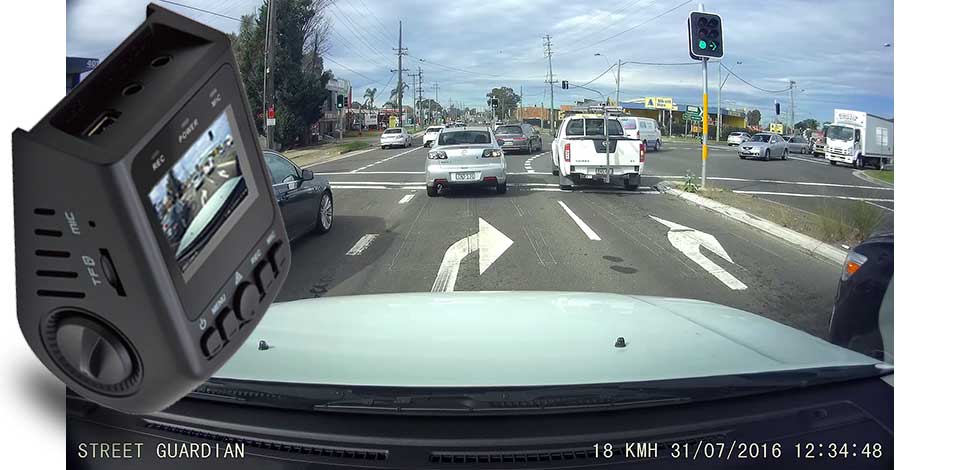
For most people doing the daily grind, the M4 crawl, the school run, the weekly Bunnings run, the basics matter more than bells and whistles. A dash cam is only ever as good as its worst day. It needs to:
A good-quality dash cam does these four things without fuss, trip after trip. It doesn’t need to be flashy; it just needs to work. That’s worth remembering if you’re weighing up a best-quality dash cam shortlist and feel tempted by a longer spec sheet: reliability should sit above resolution on your list of priorities.
If you’re carrying tools, kids, or clients, a front-only camera can start to feel a bit thin. Front and rear coverage tends to make more sense here, because:
For tradies and families racking up serious kilometres each week, the best vehicle dash cam with dual-channel recording usually earns its keep within the first year.
One of the biggest reasons to fit a dash cam is the legal protection it offers. Video footage filmed from a public road is generally accepted as evidence in Australian traffic disputes and court proceedings, provided it’s unedited, timestamped, and clearly shows what happened. That matters most when witness accounts are shaky, contradictory, or don’t exist at all.
This bit trips a lot of drivers up. Under Rule 297 of the NSW Road Rules 2014, you can’t drive with anything that blocks your view of the road. In practice, that means your dash cam needs to sit behind the rear-view mirror or low on the passenger side of the windscreen, not stuck dead centre at eye level. Get the position wrong and you risk a fine, and in the worst case, footage that gets challenged in a dispute because the camera itself was mounted illegally.
If your dash cam also records audio, keep in mind that NSW surveillance laws generally require consent from everyone involved in a recorded private conversation. Most drivers simply switch the microphone off and let the video do the talking. A professional dash cam installation takes care of correct placement for you, so it’s one less thing to get wrong.
Traffic disputes are rarely straightforward. Two drivers, two different versions of events, and a police report that can only capture so much. This is where footage does the heavy lifting, showing speed, indicators, lane position, and the exact sequence of events in a way memory alone can’t.
For footage to actually hold up, it generally needs to stay in its original, unedited form, with the timestamp and metadata intact. Courts and insurers both treat it as strong, objective evidence, right up until someone can show it’s been tampered with, so resist the urge to trim or edit a clip before you hand it over.
Dealing with insurers after an accident is stressful enough without an argument over who’s to blame. Dash cam footage cuts through a lot of that back-and-forth by showing exactly what took place, which usually means a faster claims process and a fairer outcome for you.
Don’t expect it to shrink your premium, though. Most Australian insurers don’t currently offer a straight discount for having a dash cam fitted, the Insurance Council of Australia has pointed out that a camera doesn’t actually reduce your risk of having a collision, so it isn’t priced into most policies. Research from comparison site Compare the market: only around one in five insurers reviewed apply any reduction at all, averaging a little under 4% for NSW drivers. Where a dash cam consistently earns its keep is avoiding your excess when you’re proven not at fault and getting your claim resolved without weeks of back-and-forth.
A decent dashcam needs to perform well every single day in conditions that are far from ideal. Sydney summers, harsh glare, wet-weather night driving, and long stretches parked in the sun all expose a weak camera fast. Here’s what actually matters when you’re comparing options, whether you’re after the best dashcam for car commuting or something tougher for work use.
Look for high-resolution footage, 1080p or better, so the detail holds up when you need to zoom in on a number plate. If you’re eyeing off a best 4K dash cam from Australian retailers’ stock, remember that resolution alone doesn’t guarantee clear footage. A cheap sensor in a 4K housing can still produce blurry, unusable video in low light.
A wide-angle lens, ideally 120 degrees or more, captures more of the road without warping the image into something unreadable. Some drivers search for the best car camera Australia-wide when they really mean a dash cam with strong side-to-side coverage; the terms get used interchangeably, but the feature you’re after is the same.
Sydney’s roads don’t get any quieter after dark. Make sure your dash cam records clearly at night or in low light, because that’s often when the footage matters most: a hit-and-run in a dim car park, or an incident on a poorly lit back street.
Check that it takes a decent-sized SD card and supports loop recording, so old footage is automatically overwritten once the card fills up. It sounds minor. It isn’t; a camera that stops recording because the card is full is no better than no camera at all.
A built-in GPS logs your location and speed alongside the footage. That extra layer of data can back up your version of events in a dispute, showing exactly where you were and how fast you were travelling.
A lot can happen while your car just sits there, which is exactly the gap our vehicle security options are designed to help close. Parking mode keeps recording (or triggers on motion or impact) even with the engine off, which is genuinely useful for hit-and-runs and car park dings. Just make sure it’s wired up properly so it doesn’t quietly flatten your battery overnight.
A lot of drivers start with a front-only camera because it’s simpler and cheaper. Fair enough. But a front-and-rear setup, sometimes marketed as one of the best in car dash camera Australia dual-channel options, often gives cleaner, more complete footage without feeling like a compromise down the track.
If you’re parking in tight, busy areas, think Parramatta, the CBD fringe, or a packed shopping centre car park, there’s a real chance someone clips your rear bumper and drives off. Rear coverage catches what front-only footage simply can’t.
Newer cars generally suit a cleaner dash cam setup, particularly if you want the cabin to still look tidy. A proper install also matters more here, since cabling needs to be tucked neatly through trim in hatchbacks, wagons, and SUVs rather than left dangling across the windscreen.

|
Feature |
Front-Only Dash Cam |
Front & Rear (Dual-Channel) |
|---|---|---|
|
Coverage |
Records the road ahead only |
Captures front and rear footage simultaneously |
|
Best for |
Simple commutes, tighter budgets |
Busy car parks, rear-end disputes, rideshare drivers |
|
Insurance value |
Solid for most front-facing incidents |
Stronger evidence for rear-end and reversing claims |
|
Installation |
Straightforward, single cable run |
More cabling involved, best left to a professional |
|
Typical price |
Lower upfront cost |
Higher upfront cost, often worth it long term |
This is where a lot of buyers overspend without meaning to. A 4K dash cam can absolutely deliver sharper detail, clearer number plates, crisper signage, but only if the rest of the camera is reliable enough to make that extra clarity count for something.
A well-built 2K or Full HD camera can still be the better buy, especially when a cheap 4K model falls short where it actually matters:
|
Factor |
4K Dash Cam |
2K / Full HD Dash Cam |
|---|---|---|
|
Detail on plates & signage |
Excellent, especially when zoomed in |
Good, usually enough for most disputes |
|
File size |
Large, fills SD cards faster |
Smaller, stores more footage |
|
Low-light performance |
Varies depending on sensor quality |
Often more consistent |
|
Price |
Higher |
More budget-friendly |
|
Best for |
Drivers wanting maximum evidentiary detail |
Drivers wanting reliable, affordable everyday coverage |
4K can absolutely be worth it. Just make sure the camera underneath the marketing is genuinely solid, and that it’s installed properly.
Even a genuinely good dash cam can disappoint if it’s mounted badly, wired poorly, or set up with the wrong settings. Installation affects visibility, footage angle, parking mode performance, power stability, and how tidy the final result looks inside your car, on top of the legal placement rules covered above.
A professional install also means the system gets matched to your specific vehicle instead of forced into it. That matters even more with newer cars, rear-camera cabling, and any setup where you want reliable performance without a mess of visible wiring across the cabin.
Xtreme Car Audio has been Sydney’s trusted choice for car audio and electronics since 2008, you can read our full story on our About Us page, and that experience shows in how we approach dash cam installs. We were named Automotive Business of the Year in 2013, and we still run our Blacktown workshop like a close-knit team who genuinely enjoy this stuff.
We take the time to understand how you actually use your car, then recommend a setup that fits whether that’s a simple front camera or a full front-and-rear system with parking mode. We stock trusted brands including Street Guardian, BlackVue, and DeepFly, so you’re never limited to a single option.
Every installation is neat, cabling is properly hidden, and it comes backed by a lifetime warranty on our workmanship, plus the manufacturer’s own warranty on the unit itself. Whether you’re comparing the best dash cam Australia wide or you’ve already picked your unit and just need it fitted properly and legally placed, our team can help.
The smartest way to choose is to narrow it down by how you drive, where you park, and how much coverage you genuinely need. That beats chasing the loudest spec sheet or the cheapest price tag every time.
Visit our Blacktown showroom, give us a call, or get in touch online and we’ll help you choose, fit, and set up the right dash cam for your car.
